
Zigging to the bottom
How can a free, competitive market collapse into every player offering the same unsatisfactory offer? A story of three proverbs

(This essay was inspired by a post by John Paul Rollert)
She used to quite like flying. More than just not minding the frequent travel, she actually used to enjoy the experience: the check-in rituals, slotting her carry-on case in the locker, the tea and coffee on tap… Yes, flying was a bit pricey, but the occasional random upgrade almost single-handedly made up for that. Perhaps a low-cost competitor might give the established airlines a kick up the backside and make them a little more efficient and cheaper? And lo: a no-frills operator barged in, and the prices, they dropped. The high life was good.
A wish fulfilled
Wonderful, the way the competitive market had been doing its thing. Profit margins must have been way too generous. Sure, the symbolic meal had been swapped for a two-pack of crackers; hungry travellers could get some bland sandwiches in exchange for serious money – but nobody’s obliged to eat on the plane, after all. Next, the legroom mysteriously shrunk, as did the maximum acceptable size of carry-on bags. Still, kind of unavoidable to create extra capacity and minimize turnaround times – who could be against that? Anyone who wanted could upgrade to an extra legroom row, or pay for a larger bag. More recently, choosing your seat had become payable, and checking in at a desk rather than at a machine also meant an extra fee – all this not just for the new entrant, but for the many legacy carriers that had followed suit. Individually perhaps minor frills, but together they were little luxuries that used to make her feel valued. Now they were gone, she felt like cargo. “Be careful what you wish for”, her great-aunt used to say when she was a little girl expressing unreasonable desires. Yes, she and her fellow frequent flyers had got their wish, but they were far from happy. Isn’t that odd?
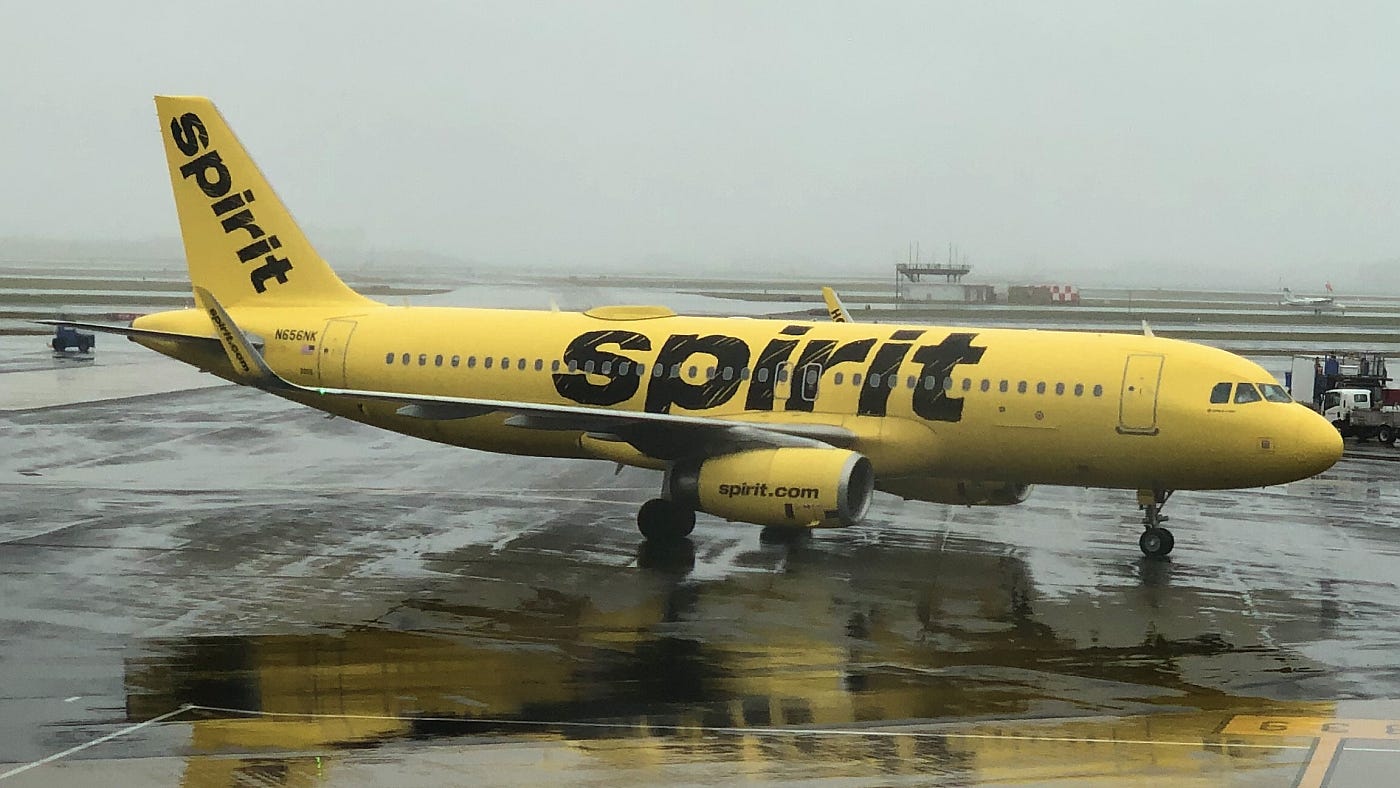
The ultra-low-cost strategy of the ambitious new entrant in scheduled air travel had managed to seize market share from the comparatively bloated legacy airlines. Their pared down product, with every extra to be paid for, enabled them to offer rock-bottom baseline prices, and passenger numbers and profits rose five-fold in its first ten years. Anyone questioning the wisdom of the business model had been served a generous portion of airline humble pie. But it wasn’t to last. When rising fuel costs turned profits into losses that kept on accumulating, the company eventually went bust. Few people mourned its demise. Blaming it for starting a race to the bottom, reactions were more “good riddance” than “rest in peace”: the carrier had managed to break the market.
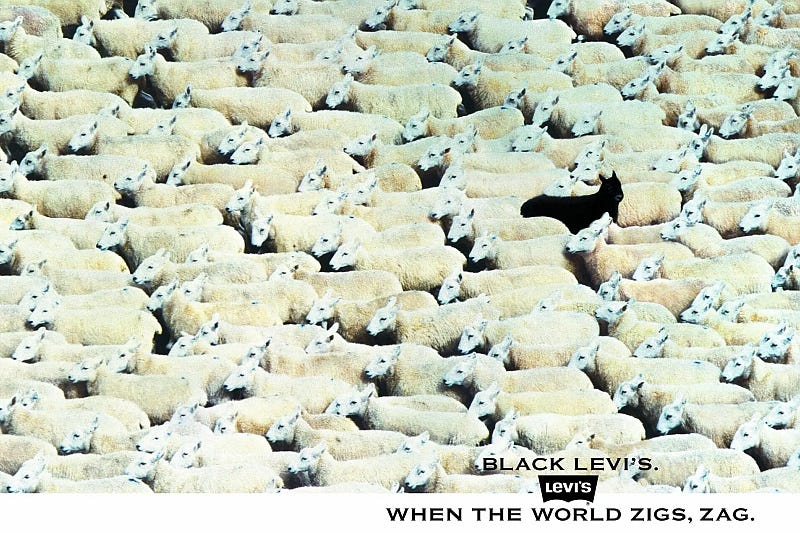
But was that a fair accusation? The demand for its trimmed-down budget product suggests it appealed to at least a section of the market that had been underserved until then. People vote with their wallet and the quintupling of their passengers was, if anything, a sound vote of confidence. Much of that market had probably been new flyers or existing flyers flying more, but a sizeable portion surely were former legacy airlines customers attracted by bargain fares. A price war may have seemed inevitable, but it was not the only, perhaps not even the wisest reaction. In 1982, the startup advertising firm BBH got its first commission from Levi’s, then facing competition from retailers’ cut-price own brand jeans. The slogan still resounds more than forty years on: “When the world zigs, zag” (not quite a proverb, but it should be one). Yet, instead of zagging, the established airlines opted to zig along with the newcomer, but in the process deprived the flying public of an alternative.
The ease of zigging along
That choice meant the bosses of the other airlines were also in the business of wishing: wishing their deep pockets would enable them to beat the upstart at its own game, and lure back the lost customers with their trusted brands, generous loyalty programmes and better seating. It was wishfully thinking that reduced prices would boost load factors and maintain margins, without having to tweak their superior offering. Yet, as they tried to undercut the price-cutter, they found that, to make the numbers add up, they had to reduce costs. And while their nemesis had the frank, uncompromising courage of its unashamed no-frills mission, they desperately tried to hang on to the vestiges of their legacy identity, even as they were compelled to dismantle it bit by bit, reducing or removing everything that used to make their service distinctive and their customers feel appreciated. They bet the firm on zigging, but their heart was not in it. Isn’t that odd?
A free, competitive market is supposed to stratify: different players cater for different categories of consumers, in niches where they are the best placed. Before air travel deregulation, differentiation between airlines had been modest – different flavours of the same menu, but at least the menu offered service levels from basic to very comfortable. Now, that menu was reduced to a single, identical low-cost dish, aimed at the travellers prioritizing headline cost above all else, especially at the point of purchase. This race to the bottom was not the consequence of a market failure, but of salience failure. The market had worked as designed: optimizing for what customers appeared to want, not what they actually valued while travelling.
It was not really the ultra-low-cost competitor that initiated the race to the bottom. What it did was to reveal – unintentionally sacrificing itself in the process – how easily such a race is started and how hard it is to stop it. The culprit is a common, profound human flaw: denying that “you cannot have your cake and eat it”. Travellers and airlines unwittingly colluded in a downward spiral of delusion and misinterpretation. Fixated on the price, passengers forgot there was a trade-off to be made with other things they value. Legacy airline marketers, concerned about safe career progression as much as the brand’s long-term health, heeded John Maynard Keynes’ advice: “it is better for reputation to fail conventionally than to succeed unconventionally” – to take a performance hit while zigging was more expedient than to succeed while zagging. In organizations, bravery is not often rewarded, especially if it does not have an immediate payoff…
So our passenger is mourning – not the demise of the no-frills carrier, but the market that its success destroyed. She got what she wished for (cheaper flights) and lost what she didn’t realize she valued (the option of a better offer at a reasonable price). Her wish was granted, but a hidden clause guaranteed everyone else’s identical wish would be granted too, with dramatic compound effect.
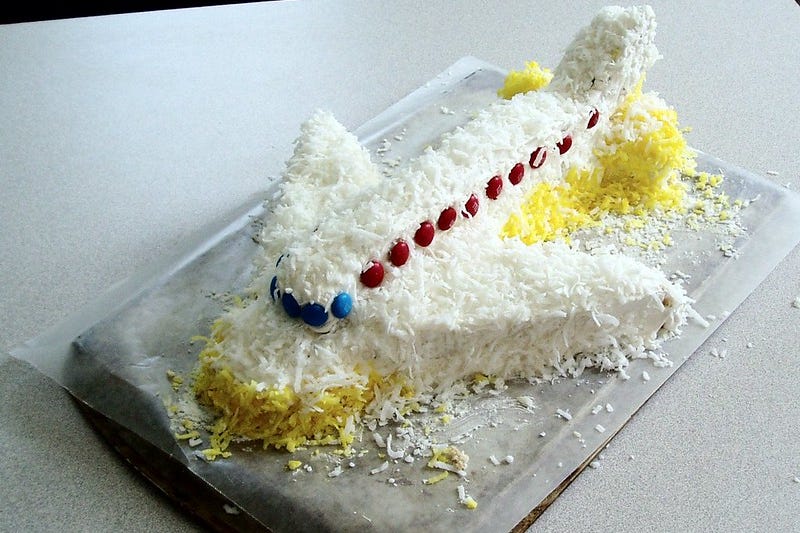
She did get to eat her cake, yet found that none was left.
I really like the idea of Zig-Zagging to the bottom, Koen. I wonderful if this plays out the way it does in the case of airlines because the price for entering the market is so extravagantly high. There are only so many gates an airport, and, at least for the foreseeable future, there always will be.
A very provocative essay, indeed!
I really did/do not like the travel to xyz "an sich" as opposed to be there and enjoy not only the work but also to saunter in that xyz city, museum, nature, meeting, ... and then, when I had to travel for reasons outside my will, I always traveled with as much affordable comfort as possible - some will call it luxury. I did/do not understand people that want to travel at all costs - as low as possible or even less. Again (as usual) these remarks hardly fit the deep big business-competition-aspects of your piece, but both sides are odd!