
Two superpowers
Can both the presence and the absence of a certain characteristic be a superpower?


If you’re anything like most people, you might, on occasion, sing a song at full blast in the shower, or do a silly dance to whatever is on the radio when you’re alone in the kitchen. Singing when nobody’s listening or dancing when no one’s watching is no problem. But in front of an audience, even of just one? No way. It’s not that we are fearful of physical or material harm to ourselves, or want to avoid the guilt of having harmed someone else (there are no known cases of people requiring medical attention as a result of someone singing out of tune). All it is, is that we are worried about what others might think of us. Isn’t that odd?
Not caring: feeling free (but not too free)
Yet some people seem unburdened by this concern that weighs the rest of us down. We might even secretly admire them. How come most of us experience this reluctance to expose ourselves to the (expected) criticism or derision from others?
A likely explanation is the unpleasant emotion of embarrassment we anticipate, the response to being aware of having committed a social misstep. It is a milder form of shame, the emotion we feel following a serious moral transgression, which evolved as an adaptation as our ancestors started living in small communities. Social cohesion and conformity to group norms were crucial for their success, and shame became an evolutionary masterpiece of social regulation by drastically reducing the need for expensive policing. Once internalized, external enforcement is no longer necessary, it operates preventatively rather than reactively, and scales automatically with social complexity. Societies that developed this regulatory system would have had a significant adaptive advantage.
But to be effective, shame and embarrassment had to be not just a signal to the group of acknowledgment of a transgression and penance, but also a defence mechanism against social devaluation. The anticipation of shame motivates us to avoid transmitting information that might harm our entitlement to the group’s aid and support, and our reputation as a sound community member – what Wee and Sznycer call the information theory of shame. For that to work, however, we need to care, and it is our innate care, linked to our self-consciousness, that can make it feel like a straitjacket, especially if – for whatever reason – we are risk-averse.
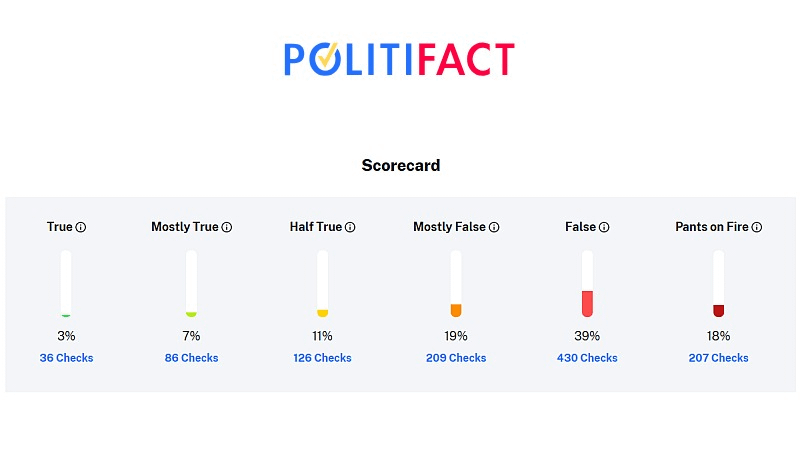
This is why we can be so envious of people who do not seem to care what others think, and view this ability as a superpower – especially if they get away with violating norms and end up better off as a result. There is something unjust about people not being taken to task when they do so, whether it is a fellow student who submits an assignment written by ChatGPT instead of penning it herself, a colleague who makes sexist or racist remarks, a shoplifter walking out with stolen iPhones, or a political leader who, according to Politifacts, over 1093 statements made since 2011, has been stating falsehoods or pants-on-fire falsehoods 57% of time.
Caring is our inner voice telling us better not to do something that might reflect badly on us, putting the brakes on questionable behaviour. It helps us preserve our reputation and reinforces shared moral boundaries. Evolution has not quite finished the job, as not everyone exhibits that ability. Perhaps this is because ancient tribes continued to ensure that the occasional person born with a reduced level of caring about their reputation or about moral rules was suitably chastised when needed. Clearly, if too many people were like this, society would quickly break down in the absence of massive policing. But a small number can persist with no more punishment than eye rolling, tutting and head shaking from their critics. That is not evolution’s problem – it’s ours. Do we care enough to stand up and safeguard the norms?
The opposite of not caring
Paradoxically, while the ability not to care may seem a superpower, so is the opposite. Many people care deeply about doing the best job they can – in professions like nursing or teaching, but also elsewhere. Legendary record producer Rick Rubin’s commitment to excellence is well known. His own work ethic is his secret weapon to push the artists with whom he collaborates outside their comfort zone and perform the very best they can (exhibit A: a septuagenarian Johnny Cash covering Hurt by industrial metal band Nine Inch Nails). The fishmongers at Seattle’s Pike Place Fish Market, immortalized in the book Fish!, are dedicated to sourcing the best possible fish, preparing it as best they can, and selling it in the most entertaining way. And millions upon millions of people around the world pursue excellence in exactly the same way – whether or not they get paid for what they do, and whether or not anyone is looking. We all have that superpower.

The positive counterpart of shame here is pride. Just like anticipating shame, more even than the fear of detrimental material consequences of norm violation, prevents us from acting in a questionable manner, so pride can, independent of any material gains, motivate us to perform at our best. But both have a shadow side. Just like we can care too much about what others might (but in all likelihood won’t) think about us, we can care too much about delivering perfection. We can become so dedicated to a project or our job, or even a hobby or a cause, that we sacrifice more than we should. Nobody on their deathbed has ever said “I wish I had spent more time at the office”…
We possess both these superpowers, but we should not make the mistake to think that they are absolutes. It is not so much to care or not to care that is the question, but what do we care more, or less, about. The smart way to handle the paradox is to recognize it as an issue of calibration. Whether we care or not is not dictated by our personality, but by the choices we make – and we can maintain our own hierarchy of care.
Should we, say, at a wedding party, stay away from the dance floor lest someone thinks our moves are inept? We can decide whether we care more about enjoying ourselves than about what others might think. We can ask ourselves, “What would I regret more – trying and failing, or not even trying?”, or “Whose respect do I genuinely value?”
“Someone might think…” should not be enough to hold us back. Selective caring is adaptive: we should neither care about everyone’s opinion equally (that way lies paralysis), nor about nobody’s (that only leads to social isolation).
Maybe our real superpower is being able to determine when we care and when we don’t, and whose judgment we really care about. And if we care enough about someone acting as if they “have no shame”, we can choose to denounce them, and do our bit to help someone, whom evolution appears to have overlooked, adhere to the norm – whether they are the president, or a mate in the pub.