
The Fairness Cascade
When people reject profitable opportunities, it’s easy to blame irrationality. But that may be too hasty a conclusion – the opposite may be the case.


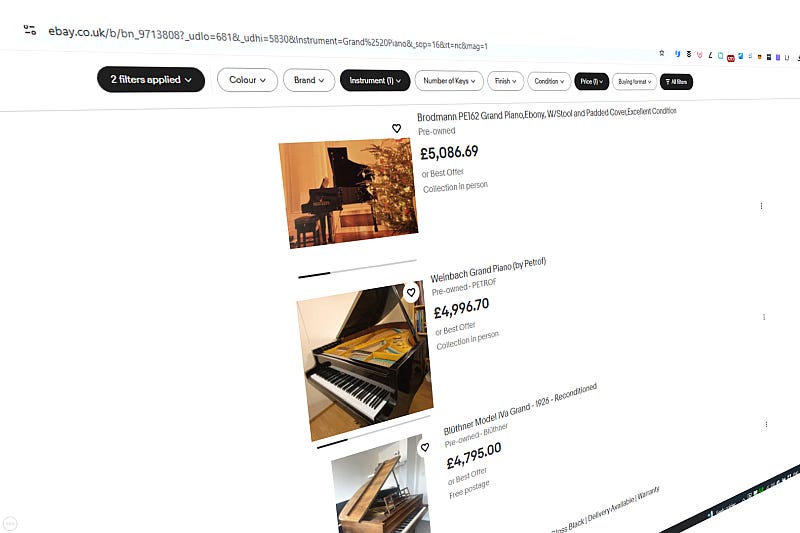
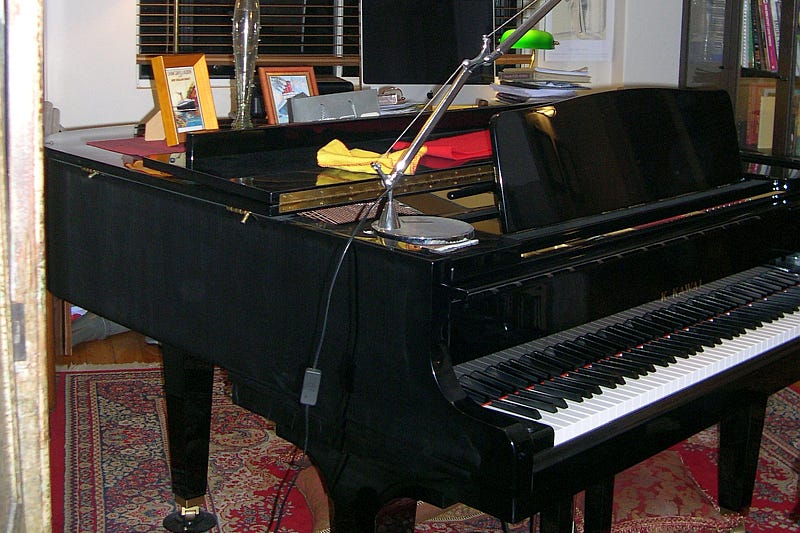
At the end of last year, one of my piano teacher’s students, an American expat, was moving back home after many years in the UK. Rather than ship her own grand piano across the Atlantic, she had opted to leave it at home, and bought one here, which she now wanted to sell. My teacher, whose own grand piano is very similar, had made a half-serious, ludicrously low offer, “just in case you struggled to get any interest”.
Time passed. A couple of weeks before she had to vacate her house, nobody had come forward, and she contacted my teacher to let him know she was accepting his lowball offer. My teacher now felt rather uncomfortable – he didn’t really need another piano – but she insisted. Then – incredibly – literally one day later she received two offers: one at her asking price from a graduate student, and one for 10% more from a TV and film prop company. When she told my teacher he immediately proposed to step aside, but she refused. The deal was done, and he now has a grand piano in his holiday cottage. Yet, when he told me this anecdote, I realized that he’d had another option: buy it at the agreed price and immediately resell it to the highest bidder for a handsome profit.
Standard economics, the realm of homo economicus **, would predict that people maximize material outcome whenever possible. Yet in here, in the real world, on three successive occasions – accepting the lowball offer, refusing better bids, and forgoing a profitable resale – people actively rejected this logic. Isn’t that odd?
It started with embarrassment
My teacher’s friendly backstop offer, having suddenly become stark, embarrassing reality, may retrospectively have appeared to be taking advantage of someone under duress. A higher price might have addressed this, but how? Unless his student now rejected his original offer, there was no sensible reason for him to up his bid. But from her perspective, negotiating a higher price would require an excruciatingly difficult reputational dance to avoid looking greedy – itself a clearer case of exploitation (of his emotional distress) than his buying the instrument for the implicitly agreed lowball offer.
We tend to abhor and avoid such exploitative behaviour for sound evolutionary reasons: a one-off act of exploitation could taint our reputation for far longer than the gain is worth. Over time, what would have started as an adaptive instrumental calculation appears to have been internalized as an innate aversion to benefiting from others’ predicament. This aversion, as it turned out, shaped what happened next.
When the serious offers arrived, the student refused to reconsider. Why? She faced a clear choice: stick to the original deal, or accept my teacher’s offer to cancel and sell to one of the other bidders. The latter was the obvious rational option – it would maximize her gain and resolve my teacher’s embarrassment. Yet she wouldn’t hear of it.
But by signalling his reluctance to exploit her situation, my teacher had created the conditions for her response. His moral discomfort became an implicit invitation – a challenge even – for her to reciprocate by making her own sacrifice. We appear to have a strong impulse to match others’ displays of fairness, especially when their moral concern is on our behalf. Once one person has raised the moral stakes, backing down becomes awkward, and instead the pressure to match or exceed that gesture becomes compelling. This hints at an escalating dynamic that develops further.
Why not make everyone better off?
It is the last missed opportunity that is the most striking. That the idea of buying the piano at the agreed price, and immediately selling it to one of the interested parties and pocket the handsome profit was promptly and emphatically rejected was not so surprising: this would be a pretty blatant instance of exploiting the situation.
But there was an alternative option. If my teacher had bought the instrument and immediately resold it to one of the other prospective buyers, splitting the difference with his student, everyone would have been materially better off, a classic pareto improvement ** – without any trace of exploitation. Yet this option was never on the table. Why? The crucial distinction: my teacher benefiting from the low price felt acceptable, even generous on the part of the student. But profiting from that price by reselling it felt exploitative, even parasitic.
The difference seems to hinge on whether value is added. When he keeps the piano, he is using it: there is a genuine exchange. When he flips it for profit, even if a fair share goes back to the student, he is engaging in pure arbitraging – extracting money without contributing anything. Evolutionary logic would have penalized such middleman behaviour: those who profit without adding value were historically parasites on the group (and even in modern economics, such rent seeking ** gets a bad rap). We have inherited a visceral aversion to such practices – in others and in ourselves – even if it would make everyone better off.
Each of the three decisions made sense individually. As a sequence, they make even more sense: each choice created a moral-reputational situation that constrained the next one. The teacher’s reluctance to exploit the student’s predicament created the opening for the student to demonstrate honour, and her insistence on sticking to the original deal made subsequent profit-taking unthinkable. Once the first step is taken on a path that prioritizes fairness over material gain, reversing course becomes reputationally and psychologically prohibitive, and the stakes escalate with each further step.
This anecdote illustrates how morality transcends single transactions, with reputational concern providing the connective tissue. The accumulation happens not only in a chain of transactions like this one, but also across multiple, independent dealings with different people over time. Each choice for fairness reinforces our commitment to (and reputation of) being someone who prioritizes this principle. When enough people act in this way, and respond to others doing so, this becomes a self-reinforcing norm at group level, and ultimately across entire societies.
What, at first sight, looked like local irrationality is actually a sophisticated social and moral reasoning about ongoing reputational games with escalating stakes. Far from irrational, this is rationality operating at a level where fairness norms persist and self-correct – not despite individuals behaving ‘irrationally’, but because of it.
Can you comment on reselling it at the same price?
Brilliant