

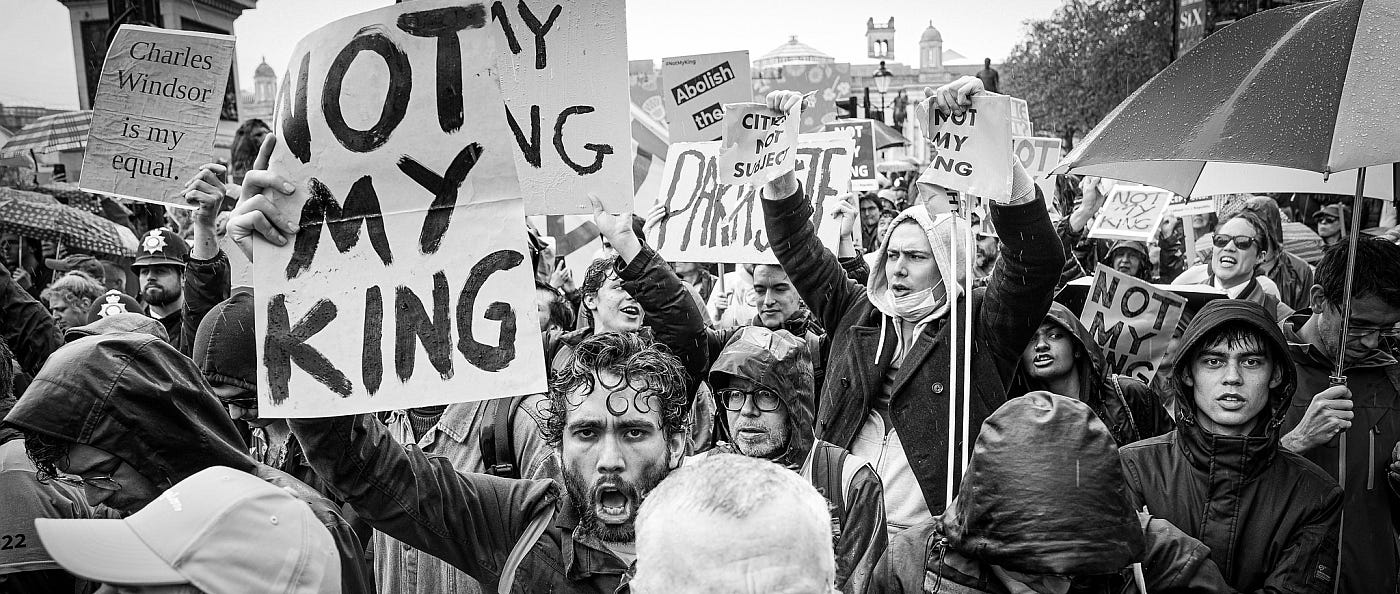
Last week, the (ex-)Prince Andrew saga came to a conclusion – he has, as the contemporary term goes, been thoroughly cancelled by his brother, King Charles. Rightly so? Voxpops in the BBC Radio 4 news suggested the mood among the general public was clear and unequivocal – “good riddance” would be a pretty accurate summary. On the question of whether the monarchy should be abolished, opinions were more divided (recent polls show a 60/40 split in favour of retention), but equally emphatic and lacking ambivalence or hesitation. On a matter of considerable constitutional complexity, respondents were either wholehearted royalists, or confirmed anti-royalists. Surely, they could not all have thoroughly considered the question, consulted the available data, and weighed up the evidence for and against the proposition. Yet they all sounded so unshakably certain. Isn’t that odd?
Being certain on loose foundations
When police build a case against a suspect, they methodically collect and evaluate evidence until they’re confident they can convince a court. When scientists make a new discovery, they check, double-check and triple-check their results until they are confident it will pass peer review. When we go on holiday, leaving the house for two weeks, we verify we’ve switched off what needs switching off, locked what needs locking, and put in the trash what would otherwise evolve into something unpleasant in our absence, until we are confident it is all done. We gain confidence through effortful, deliberate scrutiny of the evidence to reduce uncertainty to a comfortable level.
And sometimes we are utterly confident at once, in the absence of any robust evidence to speak of – on the most complex matters. We feel as certain as it is possible to feel. Our certainty is a vibe, and scientific findings help explain how this happens. In On Being Certain, neuroscientist Robert Burton describes how the feeling of knowing is distinct from actual knowledge, a sensation rather than a reasoned conclusion. We don’t need to actually know something to be certain – just to feel we know. This is complemented by neurobiologist Antonio Damasio’s somatic marker ** hypothesis, which explains how emotions and their physiological foundations influence (and hence precede) reasoning. Our conscious mind constructs the justification for a feeling after it arises, and we experience this backwards. When quizzed about why we hold a conviction, we easily find arguments, for example regurgitating what we learned from the (social) media. If necessary, we fill in the blanks with speculation or prior beliefs – convincing ourselves in the process, without even realizing it.

Evolutionary roots
Could this be an evolutionary adaptation? Our ancestors faced multiple threats, and only those who evolved the necessary mechanisms to evade them lived to pass on their genes. That circuitry helped them recognize certain stimuli as potential threats and respond accordingly. But this ability would be useless if they started doubting the signal: missing one genuine threat (dismissing rustling grass as just wind) could be fatal. Better to run from a hundred false alarms than fail to run from one predator. This asymmetry hardwired certainty into our decision-making, overriding conscious deliberation. As we evolved, the mechanism became more sophisticated, and this instinctive machinery developed to tap into learned content, for example to rapidly judge whether someone is friend or foe.
Many such vital ingrained processes have, over the generations, become prone to promiscuous firing, even where there is no personal stake – no concern about survival or procreation. Our penchant for sweetness as a proxy for ripe, nutritious fruit is exploited by industrial candy; baby animals and even cartoon characters with big eyes trigger parental care instincts. And our ancestral propensity to map the world onto good or bad is kicked into action for frivolous preferences with no discernible effect on our biological imperative to pass on our genes – including how we feel about the monarchy. Do we feel it is a worthy tradition or a stabilizing influence in the government of the country, or on the contrary, an outdated, undemocratic anachronism? Here is our explanation of the emphatic responses of the people interviewed by the BBC.
Having such rock-solid opinions, even on inconsequential topics, can become adaptive for signalling group membership and demonstrating loyalty. Furthermore, it helps us to distinguish between moral and immoral – less relevant for our pre-human ancestors, but vital for persisting and flourishing as a group, not just as individuals. A society with rules, in which people are certain about what is morally right and wrong, is likely to be more stable, and hence not waste resources on sustaining itself, than one that is amoral. And morality is something we feel, so it’s not surprising this is where this phenomenon thrives. Our reactions to the monarchy question might tap into deeper moral templates about authority, tradition, and fairness – which are significant for group cohesion, even if this particular instance has no personal stakes
Certainty for the win
Several inbuilt tendencies support the mechanism that gives us instant, incontestable (to us) positions. Anxiety about incompleteness and ambiguity is a signal to try and resolve them, because they demand ongoing scarce cognitive resources. Certainty is the perfect antidote: we can close the file, and move on. And once we have done so, the “closed file” implicitly becomes part of our self-concept, which we defend by feeling certain about it (since doubt would rekindle the anxiety).
But perhaps most importantly, neutrality is not generally the preferred default: many of us experience ambiguity as anxiety-inducing until it is resolved by taking a position. The more we can approach situations with a clear, rapid judgment as to whether it is beneficial or detrimental, the better. In social contexts, having no opinion makes it harder for others to place us in their ingroup or outgroup, making us awkward companions. This can be psychologically unpleasant for us.
Once formed, these vibe-based convictions, arising from unsubstantiated feelings, don’t just sit there benignly – they actively shape our reality and can become self-fulfilling. Being absolutely certain we are a “people person”, not good with computers, or lactose intolerant, without ever testing these convictions, they are likely to become true for us. Confirmation bias will reinforce our belief at every opportunity, while the feeling of certainty makes our conviction unfalsifiable.
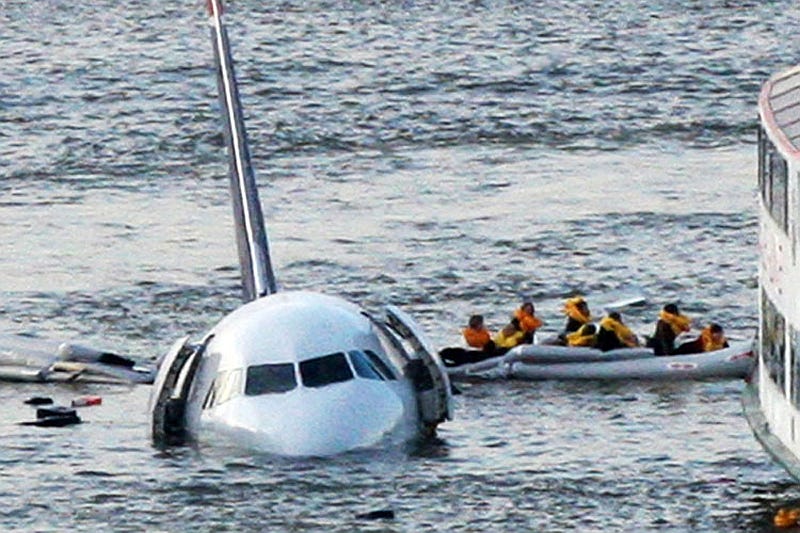
We can of course not deliberate everything from first principles, and making judgments based on informed intuition – recognizing a pattern we have encountered before – is a perfectly adaptive approach, especially under pressure. It is this kind of heuristic decision- making, documented by psychologists Gerd Gigerenzer and Wolfgang Gaissmaier, that enabled captain Sully Sullenberger to safely land his Airbus on the river Hudson. But sometimes that same mechanism fires in situations where a little deliberation would be more advantageous.
We all make vibe judgments. (I remember well, at the launch of the iPad, being certain that, with smartphones and laptops, nobody would need such a weird tablet. Meanwhile, I am on my fourth.) It can be instructive to take a good look at some of our strongest convictions – where we feel totally certain we are right, and others are wrong. They might be as trivial as what toppings are acceptable on pizza, or as profound as what approach to take in parenting teenagers. Have we actually tested them and examined evidence for alternatives? Or did they simply emerge fully-formed, feeling obvious and unquestionable? If so, we may well have manoeuvred ourselves into a vibe-based self-fulfilling certainty, closing off all other possibilities.
The ancient software of rapid judgment with a minimum of information can serve us well, but it can also lead us astray. Thankfully, we have the capability of noticing when certainty precedes reasoning. When we do, we might choose to pause and ask: what if I were certain, but wrong?
thoughtful ánd poignant piece ... that made me wonder: are you certain of your standpoint(s) and conclusion(s) - although well-documented - or do you just think or assume you are in the context of this narrative?
I have pondered over the years on how and when to use the terms #Heuristic and #Pragmatic and why that is. I came to the conclusion that both terms have no exact definition - much like #Democracy and #Zionism and unlike a triangle, or the V8 in my car, or even AI.
Unless I am, as a fundamental experimental neuro-scientist, uncertain - or even wrong - vàv the eventual or potential interest for others - or even for myself - of this reply ...