
Selfish gifts
If we’re honest, we’d have to admit that sometimes, when giving gifts to others, we take into account the effect on us too. But is that always helpful?

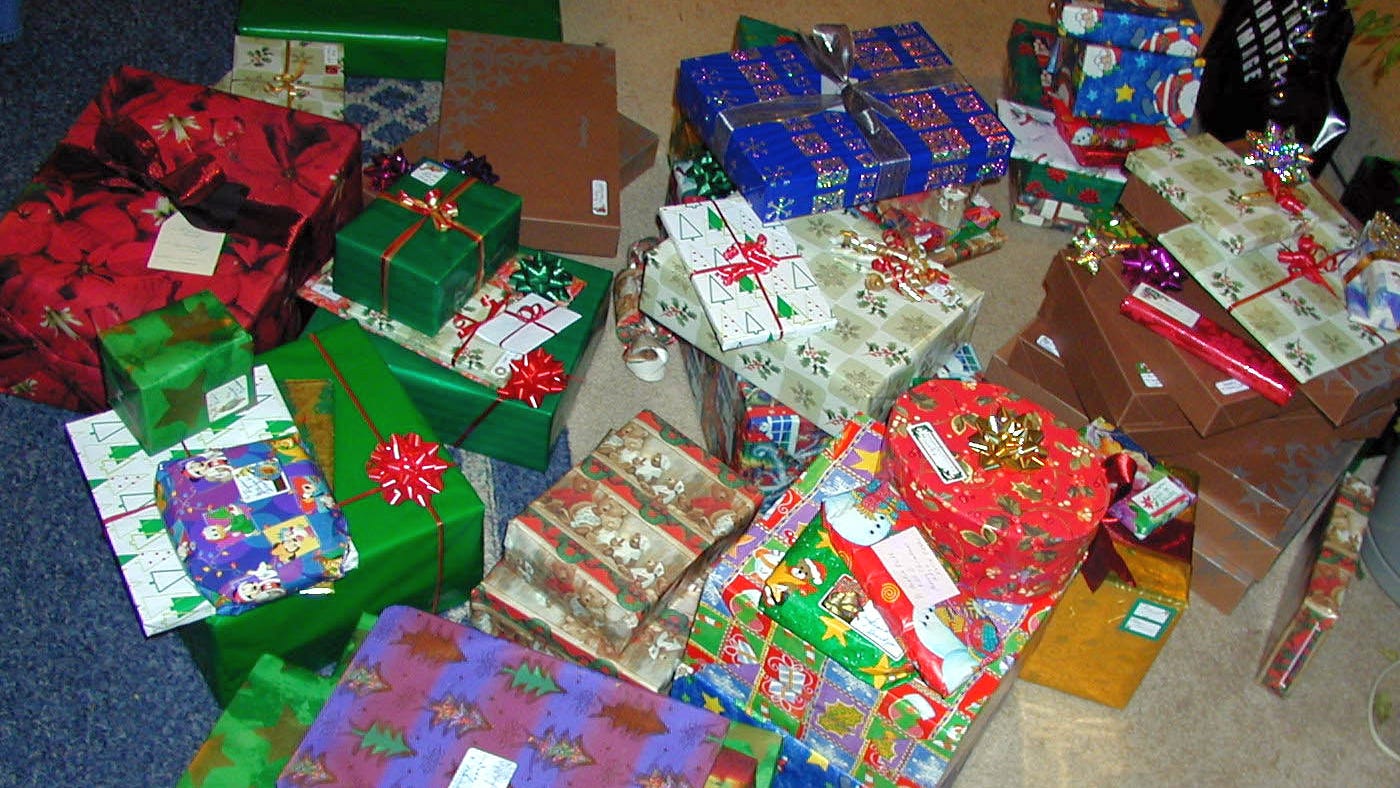
“It’s Christmas!” as the characteristic voice of Slade’s Noddy Holder is once again screaming from loudspeakers everywhere, the ritual of giving gifts in full swing. And here and there, writers will revisit The deadweight loss of Christmas (I once did, too…) – economist Joel Waldfogel’s classic paper showing how people typically value the presents they receive a lot lower than what the giver paid for it. This is largely attributed to ignorance: those buying gifts have little idea of the preferences of those for whom they buy them – perhaps because they cannot be bothered to find out, or simply because nobody receives honest feedback on the gifts they give. But what if ignorance isn’t the whole story? What if givers sometimes have little regard for what recipients want, and choose what to give out of self-interested motives? Wouldn’t that be odd?
We’re not talking about choosing a gift for its immediate surprise value (and the delight in witnessing the reaction) rather than for the recipient’s long-term enjoyment. This is no different from other instances of perception mismatch. No, there are situations where the choice of gifts is led by self-serving considerations and not by the recipient’s preferences.
Envy and reputation
A first one is described in research by Julian Givi and Jeff Galak, which suggests gifts are sometimes chosen not for how they might make the recipient feel, but for how they would make the giver feel. In particular, the authors argue that givers dislike (and will avoid) giving presents that would compare favourably with their own possessions to prevent experiencing subsequent envy, and reduced satisfaction with them – even if that means the gift fails to meet the recipient’s preferences. They demonstrated this through a series of experiments in different settings (a housewarming gift for new neighbours, a birthday gift for a friend, “out of the blue” gifts) and different gifts (housing decorations, concert, airline and baseball tickets, hotel room upgrades). For example, 60.5% of participants would refrain from giving new neighbours house decorations that were more impressive than their own, and 82.7% would not give a friend a birthday present of concert tickets that were superior to the tickets they owned… for a different concert. Even when new neighbours explicitly stated they preferred Halloween decorations, nearly twice as many participants (17.2%) would give the less-preferred Christmas variant if the Halloween option was better than their own, compared to when it wasn’t (9.7%). Aside from any moral considerations, such envy avoidance motives produce a deadweight loss similar to the one that occurs when a suboptimal gift is chosen out of ignorance.

While envy presents an emotional obstacle to optimal gift-giving, reputation anxiety is another potential source of suboptimality. In their research, Cory Haltman and colleagues discovered that givers overestimate the negative impact of a late gift for a special occasion (e.g., birthday or Christmas), because they believe it signals less care for the recipient—a belief supported by the fact that two-thirds of participants agreed there is an implicit social norm to give time-sensitive presents on time
Recipients seem far less bothered about tardiness than givers. When rating relationship impact on a 1-7 scale, the givers’ average estimate for a gift two days late was 2.29 (versus recipients’ actual rating of 1.70)—a difference of 0.59. This perception gap widened considerably for gifts two weeks late (gap of 1.21) and two months late (gap of 1.27), while on-time gifts showed no significant difference in perception.
This gap motivates givers to attenuate the presumed impact on the relationship by signalling their care for the recipient, e.g., through extra effort, or through a more expensive gift than they otherwise would have purchased. (Research by Francis Flynn and Gabrielle Adams shows givers believe costlier gifts signal greater thoughtfulness and appreciation). When givers made no special effort to compensate, the perception gap averaged 0.75 (2.79-2.04), and this was halved to 0.37 (1.95-1.58) in the compensated condition. Attempts to compensate for tardiness – whether through extra effort that can be costly in time and expense, or through a more expensive gift – also contributes to a deadweight loss: they buy no extra benefit for the recipients, who simply do not see lateness as signalling less care.
Signalling who we are
Beyond emotional reactions and social anxieties, there is a perhaps more subtle self-interest motive: our values and identity. We might see this in so-called “mindful giving”: choosing gifts bearing in mind the impact on oneself, society and the environment. A review by Ines Branco-Illodo and colleagues points out the tensions that might arise between these three levels of concern. An obvious issue when selecting mindful gifts is that they will reflect certain values and priorities – but those of the giver and of the recipient may not quite be aligned. The previous two examples can be seen as instances of similar mismatches: avoidance of envy is an act of self-care, which might come at the expense of gift that is not the recipient’s preference, and unnecessarily devoting effort or resources to save one’s reputation can be seen as an excess that is harmful to the environment.

But this can go further: consider virtual charity gifts, for example – a practice by which a giver donates (the money for, say) a goat for a village in a developing country, and receives a token to give as a gift to a recipient. This can be a fine (though perhaps somewhat contrived) gesture, if it is pre-agreed between giver and recipient. But givers might use such presents as a vehicle to signal their identity or engage in moral licensing (for example justifying the overall spend in the holiday season). Not only is it doubtful that the giver’s values and priorities inspiring this kind of gift are aligned with the recipient’s: even if the latter would happily donate an equal amount to the very same charity, the giver’s signalling their environmentally or socially conscious self-image takes precedence over the recipient’s actual preferences – a form of identity performance masquerading as generosity. In all likelihood, it represents another form of deadweight loss.
If our aim is to maximize someone else’s enjoyment with a gift (a pretty reasonable aspiration), the most efficient approach is to set aside any personal considerations entirely. This might require some effort to discover their preferences, but it will translate into genuine delight rather than in wasted expense. It might also require recognizing and suppressing some deeply embedded psychological patterns – our psychological makeup compels us to navigate a minefield of emotional self-preservation, evolved social signalling, and identity assertion.
The choice is ours.
I'm skeptical for some second order reasons, but I'd really be interested to hear what the authors would say in response.
Counterpoint and a very cool paper:
https://www.cambridge.org/core/journals/journal-of-institutional-economics/article/dynamic-efficiency-of-gifting/FDC663C9C0AC7498C8AD2811CDA77936