


Are you a rational being? Or rather Predictably Irrational, as the popular, but now somewhat discredited, behavioural scientist Dan Ariely argued – or indeed Optimally Irrational, as economist Lionel Page proposes? In this and the next article, I will look at how useful the notion of rationality really is.
Neoclassical economists have long used homo economicus as their model for the idealized human: someone who is narrowly self-interested, and who seeks to maximize utility through a process of rational decision-making. Even though this description may not have been intended as a normative judgement (maximizing utility is good, is best attempted through rational decision-making, therefore rational decision-making is good), the implication is often that it is superior, and anything else is somehow flawed. Even though we, humans, may not always live up to the ideal of homo economicus, we still ought to strive towards it – otherwise we are being irrational.
That may not sound all that unreasonable (!), but when we scratch the surface, the concept of rationality appears not to be used in as clear-cut and unambiguous a way as we might like to think. What is ‘rational’ decision-making? Does it describe a method used to come to a decision? Does it refer to the outcome, the actual choice that is made? Or is it a more general judgement of the overall quality of the process (and often of the decision maker) – the more ‘rational’, the better? All three aspects are open to considerable interpretation and subjective judgement.
Rationality in the methods
The origin of the term rationality is the Latin word ‘ratio’, which in turn was a translation of the ancient Greek word (in Aristotle’s writings), λόγος or logos, used to refer to reason, logic, and ordered thought. One of its meanings is calculation or computation, which aligns with the interpretation of rationality as the use of a deliberate, fact-based, conscious process of reasoning.

This is clearly a capability that we possess, thanks to the extraordinary cognitive abilities of our brain with its approximately 86 billion neurons, connected through 100 trillion synapses. But might elevating the use of this remarkable organ as the defining criterion, the be-all and end-all, for ‘rational’ decision making be a bit hubristic? Our advanced human brain evolved around 2-3 million years ago, but that is just a small tick on the evolutionary timeline of life on Earth, which emerged about 1.8 billion years ago. And even those very early life forms, known as protists, had to make hard decisions about where next to move, when to flee, and what to eat. And they did so pretty effectively. The organisms in our family tree often had to navigate challenging situations and complex environments, yet they all made good decisions. We, their descendants, are literally living proof. Should we really dismiss the millions of generations that preceded us, representing 99.85% of the timeline, lacking rationality? There is something almost biblical about the conviction that we humans are the rational pinnacle of creation. When this is how we frame rationality, we could rightly be suspected of a certain anthropocentric arrogance.
If our ancestors, whether brainless or possessing relatively primitive brains, all the way to our primate cousins, were all capable of making reasonable, effective decisions that ensured they survived, flourished and successfully passed on their genes, it seems a tad narrow-minded to deny them the capacity to act rationally. Moreover, the primitive ability to distinguish what is beneficial from what is harmful that helped our single-cell ancestors stay alive still forms the foundation of our decision-making skills. To judge what is good and what is bad, or even what is relatively better or worse, we rely on this capability that is as old as life itself. Restricting rationality to only the advanced cognition that necessitates a human brain is thus not only a little disrespectful towards our venerable ancestors, but also questionable as a definition.
What of the collection of methods that are often bunched under the label irrational in the behavioural sciences – intuition, heuristics, cognitive biases and emotion? It is worth considering that they, too, are the product of millions of years of evolutionary adaptation: at the very least, their use would appear, if not unequivocally beneficial, then certainly not inherently detrimental. We should acknowledge that, when making choices, we make an effort/accuracy trade-off. Sometimes, relying on intuition, using a heuristic, or being led by a bias or an emotional hunch allows us to make us a quick, but good enough decision. It is not irrational to choose the same 87 Duck in plum sauce from the Chinese takeaway every time if that is what we like, rather than to systematically consider every item on the menu and reflecting on its pros and cons. It is not irrational, for a firefighter or an airline pilot, to tap into their informed intuition to make split-second decisions, when looking for people trapped in a burning building, or for handling multiple flight systems failures, rather than systematically going through every eventuality in the training manual. Even biases and heuristics can be ecologically rational: the status quo bias helps maintain stability and avoid rash decisions; the availability heuristic makes us focus on recent information, which often makes sense in dynamic situations. So even if we could choose to engage our advanced reasoning capability, it may be preferable not to do so. We can, and do, make good, sensible decisions without necessarily relying on our full brain power.
The view that decision-making is either rational – when it uses deliberate, conscious reasoning – or not rational – when it doesn’t – seems highly questionable. Using the term rationality as if it were this clear-cut, is, well, bullshit.
Rationality in the outcomes
But rationality could also be taken to refer to the actual choices we make. Imagine Alice and Bob, living in the same town, listening to the same weather forecast, looking at the same sky, going out to the same place in the same way – but while Alice is carrying an umbrella, Bob has left his at home. Can we say which of the two is the rational decision? Imagine neighbours Chris and Drew: Chris has, for many years, been spending £10 every week playing the lotto, and Drew, in contrast, has long had a standing order transferring £10 into a savings account every week. Can we establish who is behaving rationally? Imagine colleagues Mo and Nick, with very similar income and family situations, yet Mo tends to get a brand-new car every other year, while Nick never buys one that is less than four years old, and then keeps it for at least five years. Can we tell who is the rational car buyer?
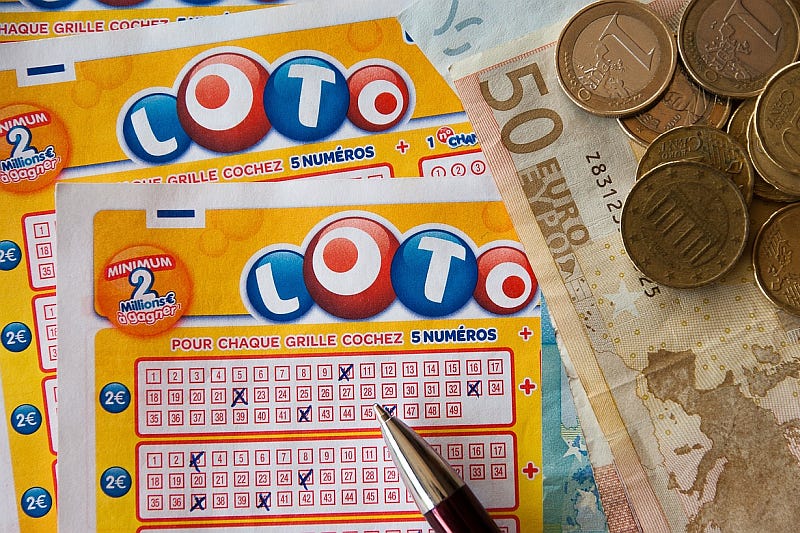
Their choices in themselves cannot tell us whether they are rational. If we judge them accordingly nonetheless, it is likely because we have a strong conviction either way which option would be the more rational choice for us. But what is, or is not, a rational choice cannot be separated from an individual’s specific goals, preferences, values and circumstances. To refer back to our old friend, homo economicus and his utility-maximizing approach: we all have our own utility function, which describes how much utility the security of carrying an umbrella, the thrill of watching the lotto draw, or the shiny bodywork of a brand-new car provide us with. This means that the rationality of our choices can only be judged by ourselves. Pretending that it can be determined objectively, is nonsense.
Effective decision making relies on an appropriate use of reasoning with other methods. So, whether reasoning plays a role to come to a decision or not does not, in itself, tell us anything about whether the decision-making process was effective. Furthermore, specific choices – the outcomes of the process – also cannot objectively tell us whether they are rational. The term rationality, is therefore deeply flawed. When we use it to make value judgements of how others make decisions, of the choices they make, and indeed of them as a person as irrational or rational, we are bullshitting.
But wait... Might rationality be salvaged if we restate it as an indicator of internal consistency, reflecting whether someone’s actions align with their goals and values? That is what we will explore in the next article.