
Overruling rules
Our lives are steered by rules, perhaps more than we realize. But it is not the rules we follow, but the exceptions we make that reveal who we are


Over the Christmas period, in one of the anecdotes doing the rounds on social media, a librarian described how a teenage boy appeared with a dog-eared copy of one of the Harry Potter books. The database revealed it was last checked out three years ago, and the boy admitted to having stolen it: “We didn’t have money for books. But I read it, I read it ten times”. He then produced a crumpled $10 bill, “for the fine”, but that was a multiple of this amount. But instead of accepting the money, the librarian made up a fictitious Amnesty Week, in which fines are waived, returning the banknote with the words, “Buy your own copy… and come back – we have the sequel.” The boy now visits the library every Tuesday.
Whether true, or something that “happened to a friend of a friend” (common this time of the year), it is plausible enough to be genuine, and indeed to highlight something peculiar about human behaviour. While there is nothing remotely extraordinary about a librarian following the rules by demanding a fine for a book returned late, what strikes us is the way she made an exception to this rule. The exception tells us more than the rule. Isn’t that odd?
Ruled by rules
Our lives are shaped by rules. Laws may be first to come to mind, but more than those, it is social norms and a large collection of personal rules that dominate.
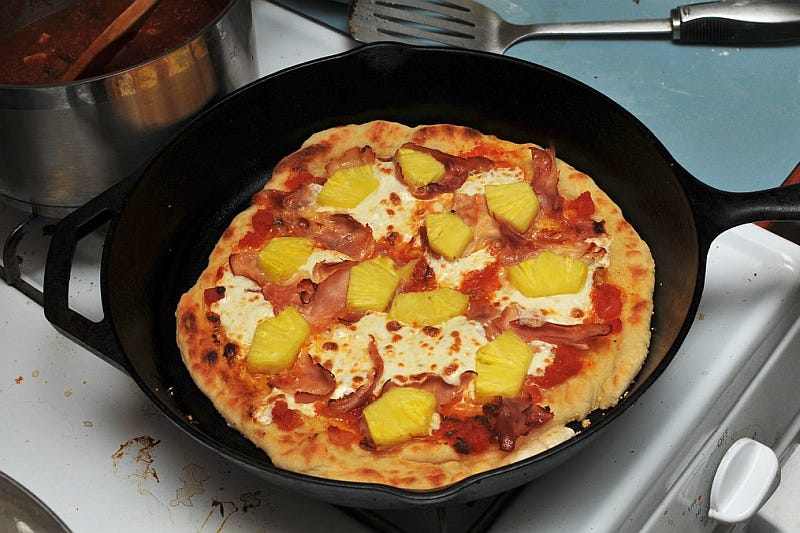
In a sense, almost every decision or judgment we make reflects a rule: how we squeeze the toothpaste (in the middle of the tube, or at the end?); how we choose what T-shirt to wear (take the top one from the pile, or pick one that reflects our mood of the moment?); our general dress sense (conventional, or non-conformist? functional and inexpensive, or smart and stylish?); what we eat or refuse to eat (vegetarian, vegan or simply omnivorian?); our timekeeping preferences (approximate or punctual?); how we allocate resources – e.g., how we measure the favours we do for our children (painstakingly equal, or depending on circumstances or need?), or how we divide up the bonus pot to our work team (according to merit, effort or outcome?); and how we divide our time between work, others and ourselves. Even whether pineapple is, or is not, a valid pizza topping is one of them.
Rules, as an organizing principle, have their origin in evolution. Even the earliest, simplest organisms needed to be able to choose between toxic and nutritious environments, between staying put or fleeing a threat, between feeding and resting, and so on. Their rules were logically unsophisticated encodings of an adaptive response to a stimulus. The capacity for logical thought to handle choice emerged much later, yet even more complex organisms like us maintain mechanisms that make appropriate choices with minimal thinking – precisely because one of the ancient rules tells us, “don’t waste energy”.
Many of the rules that inspire our behaviour also serve as touchstones for judging others. This too has an evolutionary origin: our ancestors used them to determine whether another organism was a threat to them. Our human forebears, as social beings, built on these rules to judge whether others conformed to their own norms and to determine whether they were, or could be, in their ingroup, as good people to cooperate with. We still do much the same, but in a more sophisticated manner – dividing others not just into generally with us or against us, but whether they are suitable to us as colleagues, friends, allies, hired tradespeople, pub landlords and so on.
Exceptions, noble and otherwise
It would be reasonable to expect us to use the same rules, in the same way, both to steer our own behaviour and to judge that of others – but do we? (You know the answer, don’t you.) We may like to see ourselves as (even be!) tidy and punctual, and expect the same of others, but when we occasionally fail to live up to the corresponding rules, we may well happily indulge and justify these lapses for ourselves, yet be much stricter with others. We may even extend the same leniency to “people we like”, as Robin Hanson’s cynical comment on the anecdote suggests.
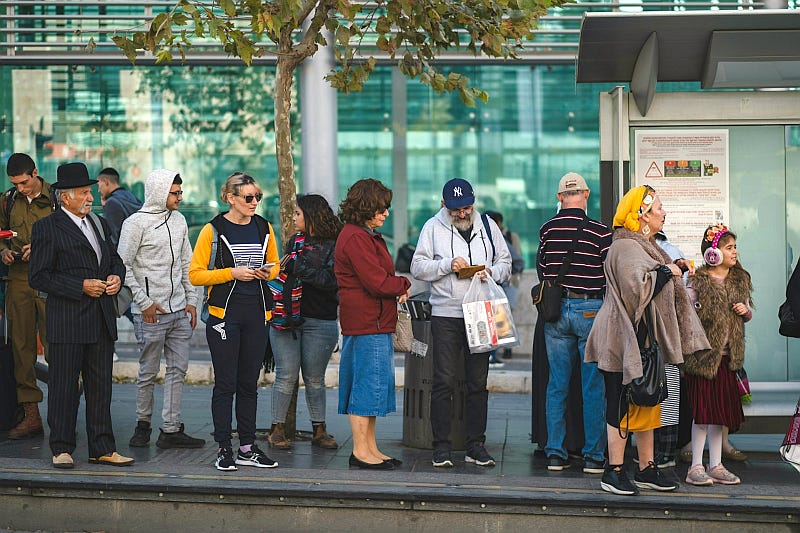
Such exceptions are an integral part of human moral reasoning, and reflect the tension between serving ourselves and serving others – or indeed our community and other groups. As social creatures, we see this kind of dilemma pop up remarkably often. We can see this “rules for thee, exceptions for me” attitude in situations as diverse as queue jumping (I’m really in a hurry), care for the environment (my car journey won’t make any material difference), tax avoidance (if the rich can do it, why shouldn’t I?), and many more. This kind of self-serving exception-making rightly attracts cynical criticism like Hanson’s.
But the exception the librarian made hardly fits this narrative. Sure, she may have deprived the library of rightfully due income, but fines are intended more as a deterrent and an incentive to return books on time than as a source of revenue. She judged that the very act, after such a long time, of returning the book and paying the fine indicated that a penalty would serve no meaningful purpose, and that acting in this way was more in line with the mission of the library, which is “for reading, not for accounting”. It reminds me of another instance of exception-making. At Timpson, the British dry-cleaning, shoe repair and key cutting chain, there is not only a rule to hire ex-offenders. They also have an exception to the general rule that services need to be paid for by offering unemployed people free dry cleaning of a suit when they have a job interview.
Yes, we tend to pride ourselves on being principled, by virtue of the rules we live by. Yet our actual principles only reveal themselves much more in the exceptions we make to those rules. Which ones we keep rigidly, and which ones we bend (and for what reasons) broadcasts more about our values than the rules themselves. That is where it becomes clear whether we tend to tilt the balance in our own, or in someone else’s favour.
As we are in the season of Fresh Starts (the term used by Katy Milkman and colleagues for the research finding that people are more effective at initiating behavioural change on temporal landmarks, like New Year), what better time to reflect on, and examine our own rules, and how we handle them? Might we make the world a little better by being a little more lenient (to others) or a little stricter (with ourselves)?
It’s all in the exceptions.