
Give me strength!
There is a limit to our physical capacity, but how close can we get to it… and how do we tap into our reserves?

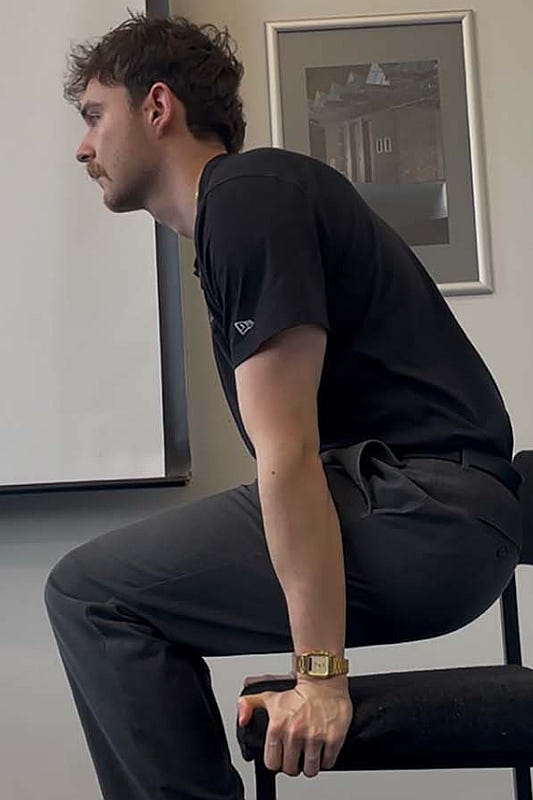
You’re struggling to open the screw cap of a bottle of pop, or the lid of a jar of jam. Oh, if only there was a trick to make your grip just a bit stronger! Well, good news everybody: there is. Pick the strongest profanity you can think of and mutter it under your breath while you give it one last go. This – with a more laboratory-like exercise of chair push-ups – is exactly what Richard Stephens, a psychologist at Keele University and colleagues found: when participants swore, they could sustain their bodyweight on average 10% longer. This is a modest, but consistent gain, replicated with 300 participants across two experiments. Boosting your strength by uttering profanities. Isn’t that odd?
This in itself is not an entirely new finding: a paper from 1961 by Michio Ikai and Arthur Steinhaus reports how participants shouting while pulling a weight performed up to 26.5% stronger. We may also have heard athletes shout or grunt in sports categories like weight lifting and indeed tennis. The theory was that our strength is normally inhibited, and shouting (among other techniques) can reduce the inhibitions, presumably brought about through a physiological mechanism of autonomic arousal, supported by the elevated heart rate typically associated with swearing. But research found the strength gain happened even in the absence of physiological markers. What this latest research now suggests is that swearing triggers a psychological state disinhibition, “counteracting the tendency to hold back”.
We are all inhibited
This tendency to hold back has its seat in the Behavioural Inhibition System (BIS), which suppresses impulsive actions and prioritizes socially appropriate behaviour. Its counterpart, which steps in when the BIS is subdued, is the Behavioural Activation System (BAS), narrowing the focus on immediate goals, prioritizing action and setting aside conflicting social concerns. Consciously swearing – a transgressive activity – briefly suppresses the BIS, which drops our self-consciousness, silences our inner critic, enables a state of flow, and boosts self-confidence. The resulting psychological release allows us to push our limits. The ‘central governor’ theory, proposed by sports scientist Tim Noakes in 1997 (based on an idea first mooted by physiologist and Nobel laureate Archibald Hill in 1924), gives this protective mechanism its most vivid expression: a brain process that limits physical output by constraining how many muscle fibres the body can recruit.
This complex system is a crucial evolutionary adaptation. Organisms that manage their inner resources as if they were limitless would soon completely exhaust their reserves, and cause structural, eventually irreparable damage to the body (notably the heart muscle), leaving them unable to replenish their energy and to reproduce successfully. We are the happy descendants of their cousins with the adaptation, which works much like a speed limiter in a car that stops us from damaging our wallet (or indeed ourselves and other road users). The throttling of available muscle fibre prevents us from exercising ourselves to death: we experience this as fatigue, and slow down.
What we can achieve through swearing is not quite overriding the governor process, but sneaking behind its back to tap into a readily available, short-term reserve – limited in capacity, but exhausting it will not cause any damage, and it is relatively quickly replenished. The fatigue we feel, as real and genuine as it comes across, is to a large degree a managed signal, rather than a direct sign of exhaustion, like the “overload” indicator on the recording device – occasionally OK, but not for continuous use.
But this is only part of the story. What if the situation presents a trade-off in which we should pull out all of the stops? Evolution has provided us with the tools to handle those, too. It seems we are capable of superhuman strength, better (and more accurately) known as hysterical strength. Such feats occasionally reach the news, or go viral on social media. In September 2019, a man working on the underside of his VW Passat got trapped underneath the car when the jack failed. Alerted by his wife’s cries for help, the 16-year-old boy next door ran to the rescue, and managed to lift the car for long enough to allow others to pull him clear. More recently, CCTV footage shows a boy of about four getting crushed by a heavy metal gate. His only slightly older companion initially wavers between blind panic and trying to lift the gate, opts for the latter, realizes it’s well beyond his power, starts running off to look for help, then returns for a second attempt. This time, he succeeds in raising the gate, allowing the smallest boy to crawl free.

When the governor is overridden
Both are perfect showcases of how the inhibition system of the central governor is not just bypassed, but swamped by signals from the amygdala (the emotional centre of our brain) and the hypothalamus (the hormonal trigger), which together translate this alarm into a cascade of adrenaline that disables the body’s protective reflexes that normally prevent maximum muscle contraction. All available muscle power, reserved for genuine do or die situations, is mobilized. But that comes at a price – recovering from the damage to tendons, joints and muscles is painful and leaves us incapacitated for days or weeks. This is what the governor normally protects us from. Only the most intense emotional triggers can override the governor in this comprehensive way: love or terror that is so far off the scale that self-preservation has become irrelevant.
This remarkable system operates at two levels: a modest, accessible buffer just beyond the governor’s normal ceiling — unlocked by a password any of us can use consciously: a grunt, a swear word, the brief con of a taboo violation. Behind that, a reserve of last resort, sealed off and accessible only to those who have stopped caring about themselves entirely. In extreme emergencies, when intense emotions swipe away all inhibition, our body releases all it’s got, and damn the cost. The master password to release this maximum resource is only deployed when the self itself has become secondary.
The most profound decision we might make – where we are ready to sacrifice our very self – is not a choice we make through considered reasoning: it is built-in to our system. There is a “we” to invoke the swear word and con the governor with an unexpected curse. But at this extreme level, the maximum we can do is only available when we have stopped being ourselves – when our deepest instinct, self-preservation, is overridden.
And all this happens in order to help someone else. Isn’t that truly, deeply, odd?
Yes, it is odd, but I'm going to go with beautiful as an adjective that describes it even more accurately.
Thank you for this interesting article. I am reminded of how people who cannot be motivated to change their own unhealthy habits can sometimes be motivated to make the same changes for the benefit of someone else important to them.