
At second sight – when facts deceive
We may say we want the facts, but as soon as we get them, we give them meaning, and promptly treat fact and meaning as one


Stating that Javier Milei, the iconoclastic economist who became Argentinian president in 2023, is a controversial figure with controversial policies is putting things mildly. Notorious for posing with a chainsaw symbolizing his intention to slash government expenditure, he also found his radical economic approach famously denounced in a letter signed by more than 100 prominent fellow economists. Many people with an interest in either economics or Argentina have since separated into supporters and detractors, with each side regularly adducing evidence for their respective case.
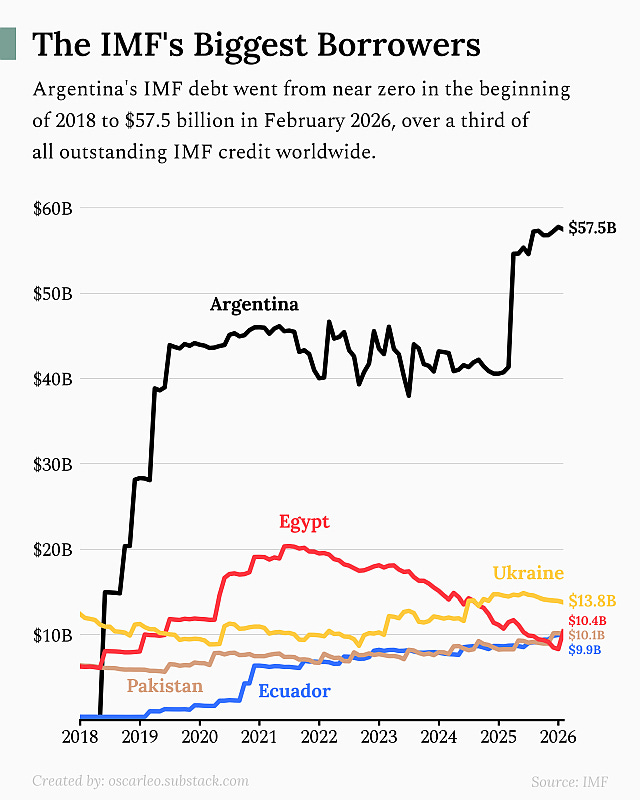
A recent example is a chart tweeted a while ago, showing Argentina’s debt to the International Monetary Fund (IMF), along with that of other large borrowers. The size of Argentina’s loan dwarfs the others – its debt of $57 billion reportedly represents over one third of all outstanding IMF credit worldwide. The author of the tweet sarcastically declares love for “anti-government politicians” who, as soon as they are elected, “take out huge loans to keep their stupid ideologies afloat”. Is that odd?
Odd at second sight
No, it is not odd in itself. The facts shown on the chart are accurate, reflecting the IMF’s own data: while the debt was already high when Milei came to power in 2023, it has since genuinely jumped up by a further $18 billion. At first sight, the tweet’s interpretation is entirely understandable. But at second sight?
The increase in borrowing turns out not to be additional deficit financing, but the accounting result of restructuring the original credit line of $57 billion the IMF extended to Argentina in 2018 when, long before Milei’s election, its finances and economy were in dire straits. Admittedly, that would not be the first explanation that comes to mind, certainly not for people unfamiliar with the intricacies of the financial management of countries. The information in the chart is technically correct, and its original source makes no claims about reckless spending. Yet the author of the tweet missed the real reason for the apparent boost in borrowing, and adopted the one that seemed natural, if not the only one that would come to a lay person’s mind. And isn’t that odd?
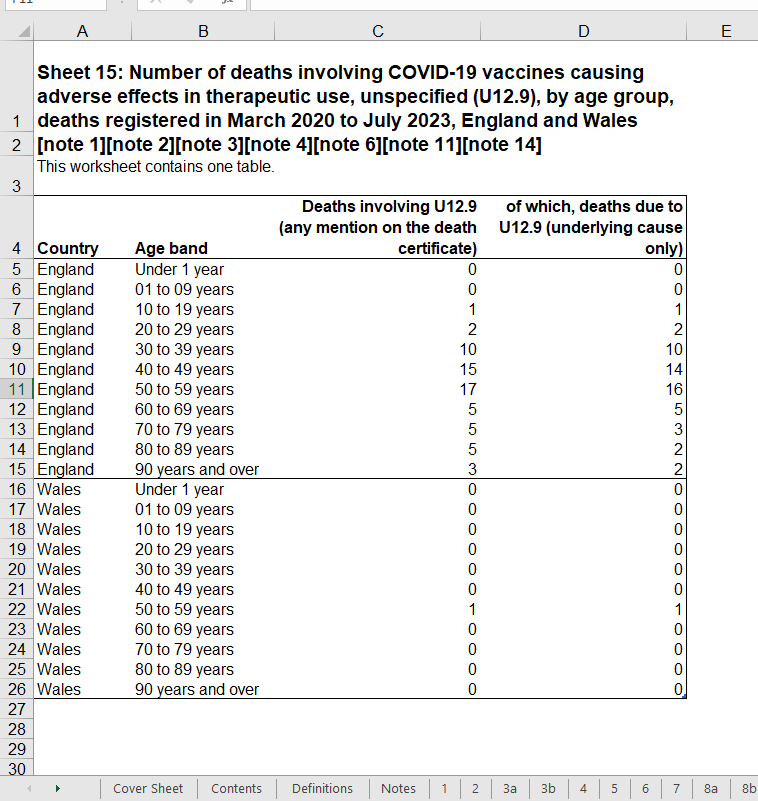
‘Missing out’ vital information and thus misinterpreting facts is a pattern that is not uncommon. Aside from incorrectly inferring the reason for an observed fact, it often involves arriving at a conclusion without accounting for important context. During the COVID pandemic, as the first vaccines were being administered, antivaxxers cited the number of Vaccine Adverse Events, while ignoring the vaccination base rates. Naturally, missing out the crucial denominator of the hundreds of millions of individuals that had received the vaccine would, at first sight, make absolute numbers certainly look alarming. Likewise, citing absolute crime figures without a population-adjusted baseline, or reporting shifts in prices or wages without adjusting for inflation may lead to incorrect inferences because it misses out an essential reference point.
It is easy to presume an intent to deceive on the part of people disseminating such misinterpreted facts. But that is because we can easily see the deception when we know – or believe – the interpretation to be wrong. Different priors, and a different chart – and we might just as easily have adopted a plausible, but ultimately incorrect interpretation. And we a few potent cognitive tendencies to give us a hand: from the innocently negligent WYSIATI (what you see is all there is – a failure to consider a bigger, a smaller, or a different picture) and the annoying confirmation bias **(using convenient facts to support prior beliefs, likewise without considering alternatives) to the pernicious motivated reasoning (using facts suitably spun or framed to construct an argumentation towards a pre-existing conclusion). But the fundamental mechanism resides deeper still.
Our ancestors did not evolve to be interested in facts per se, but to be able to interpret them so they could navigate the world to successfully survive and reproduce. Facts were placed into a wider narrative: either a beneficial one (in which they helped achieve those aims), or a detrimental one (where they were a hindrance). As facts on their own often do not provide the full story, they were, and are, typically combined with remembered knowledge, and even with prior feelings, resulting in a coherent and instructive narrative that is unequivocally right or wrong. By implication, the facts inherit that same emotional charge.
The tangled web of fact and interpretation
Thus, facts and their normative interpretation become inextricably entangled, and we no longer distinguish between the two. And it is the facts themselves that activate this deceptive process, and lead us to treat the acquired meaning as no less true than the fact itself. Rather than a pure perpetrator of misinformation, the interpreter is the inadvertent accomplice. The person who tweeted the chart – a self-described socialist according to their bio – very likely already had a negative opinion about Milei which, combined with WYSIATI and perhaps a whiff of confirmation bias, led to the interpretation, communicated with the same conviction as stating that water is wet. No deceptive intent, simply stating what is experienced as a self-evident, unconditional truth.
Misinformation of the deliberate deception kind, in which active spinning of cherry-picked facts is woven into disingenuous disinformation, attracts a lot of attention. But a great deal of misinformation is of the type discussed above: people genuinely believing they are communicating true facts, that only people acting in bad faith will reject (while it is their opponents that accuse them of acting in bad faith).
We can try to avoid this trap by anticipating the three missing frames discussed above. When we encounter a fact (such as a chart, an outcome, a number, or a trend), we can choose to suppress the urge to interpret it at once, and take a second sight – asking ourselves: what are the possible reasons for the observed fact and which has the strongest evidence?; what is the denominator that correctly frames an absolute number?; and what other variables provide essential context to a trend expressed in absolute numbers?
Thus, we engage a powerful instrument of epistemic self-defence to help us avoid presumptuously asserting “The facts say it all”, and instead aim to complete the sentence, “All the facts say is…”.
Wow, an analysis of the « condition humaine » even, worthy of the Chinese sage. Thanks Koen.
PS
According to the search suggestions the duck, duck offered me, Confusius was a foodie. 🍜
Well have you ever!
New subscriber, happy to be here!
This is a useful frame, and the three questions are doing a lot of work, especially the dismantling of the weld between fact and interpretation. Where I keep landing, though, is on the step after. Run those questions properly and I usually end up with two or three readings that all hold up reasonably well, plus a much better grasp of the context I was missing. Which is honest, and also a kind of paralysis.
I wrote something last spring about why nuance matters in an age of absolutism, and the line I landed on was that holding multiple truths means seeing the whole terrain and then choosing your ground with intention. (Here if you'd like to read it, no pressure: https://unexpectedinsights.substack.com/p/truth-in-tension-why-complexity-matters) Second sight, the way you're describing it, is what gets us to the terrain. The choosing seems like a separate move, and not one that follows automatically from the dismantling.
So: are the three questions doing the work of weighting implicitly? Or is the choosing a separate move altogether, one where you accept that some context will stay missing and stand somewhere anyway?